Events archive
See below for a list of past Prehistoric Society events.

See below for a list of past Prehistoric Society events.
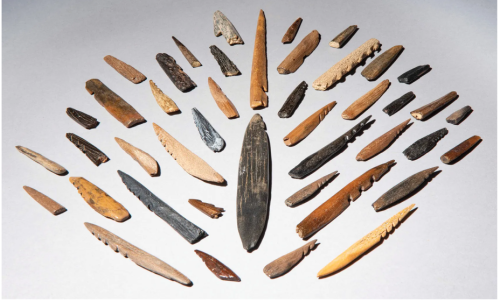
This presentation will show how Doggerland was important to the birth of prehistoric archaeology, how it was, for a time, largely forgotten, and why there has been a resurgence of interest.
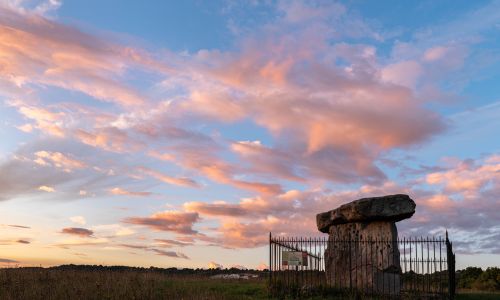
Prehistory in the Present is the second in this series of Day Schools on Prehistory: past, present and future. The day school will be online and in person.

I present here a long-term model of Palaeolithic art, as well as the results of recent research conducted using current visual psychological methods aimed at elucidating how our brains contributed to this characteristically human phenomenon called ‘art’.’

This paper will explore these events and their impact on the Mesolithic population with specific reference to several sites, including Howick and Low Hauxley, as case studies.

In this presentation I will discuss recent research on archaeological settlement sites in Vietnam that have provided important new insights into the emergence of what is commonly referred to as the ‘Neolithic’ in Vietnam.
*****Please email admin@prehistoricsociety.org to book your place: zoom link will be emailed to you 3 days before the event.*****

*CHANGE OF LECTURE*
The lecture will give an overview of the development of the isle of Lismore over the course of time from the Neolithic to the present day, employing excavation, survey, material culture (a little) animal and plant remains, pollen, radiocarbon, isotopes, aDNA and visual perception. The site of Tirefuir was excavated at the beginning of the millennium, but should be published within the next year.

In this talk, Dr Shinya Shoda will present the regional aspects of diet and culinary traditions in prehistoric East and Central Asia that are becoming clearer, based on case studies of lipid residue analysis that have been carried out by Dr Shoda and colleagues.
*****Please email admin@prehistoricsociety.org to book your place: zoom link will be emailed to you 3 days before the event.*****

The compilation of an Atlas of the Hillforts of Britain and Ireland and of the underlying database, online since 2017, provided the opportunity to reassess these iconic and much-discussed sites at a scale not hitherto attempted in these islands.

Can archaeology reveal the ‘science’ of early farming from the perspective of its practitioners? How can prehistoric understandings of agriculture inform our view of wider landscapes and monuments? And in an age of ecological crisis, what principles can we glean from the long-term story of farming across Europe’s varied environments?

This study conducts a comprehensive exploration of the enigmatic burial practices during the Iron Age in Southwest Britain (c.800 BC-AD 43). Despite the region's intriguing range of burial variations, it has not received significant attention in past research.
Awards presentation at 4.30pm, lecture follows at 5pm.